If you already run workloads on Kubernetes, it is a natural home for AI agents too. An agentic runtime for Kubernetes runs agents as pods, reusing the isolation, autoscaling and scheduling K8s already provides — instead of adopting a separate managed agent runtime. This guide explains how that works, what AgentOps runtime automation adds, and when self-hosting makes sense over a managed service.
Why Kubernetes fits agent workloads
An agent runtime needs to isolate sessions, scale with spiky demand, schedule work, and recover from failure. Kubernetes was built for exactly those problems:
- Isolation — each agent session runs in its own pod (and, with a sandboxed runtime class like Kata or gVisor, its own microVM-grade boundary).
- Autoscaling — the Horizontal Pod Autoscaler and cluster autoscaler spin agent capacity up and down with load.
- Scheduling and bin-packing — the scheduler places agent pods efficiently across nodes, including GPU nodes for local inference.
- Self-healing — failed agent pods are restarted automatically.
- Networking and policy — network policies, service mesh and secrets management you may already run apply directly to agents.
How an agentic runtime on Kubernetes is structured
- Agents as pods or Jobs. A long-lived conversational agent maps to a Deployment; a one-shot task agent maps to a Job. Either way the pod is the isolation unit.
- Sandboxed runtime class. For agents that execute generated code, use a stronger isolation boundary (Kata Containers, gVisor, or microVMs) so untrusted code can’t escape the pod.
- State and memory. Back session and long-term memory with a store outside the pod (Redis, a vector DB, Postgres) so state survives restarts and rescheduling.
- Tool and MCP gateway. Route tool and MCP calls through a gateway service with scoped identities, rather than giving each pod broad credentials.
- An operator/CRD. Mature setups define agents as custom resources, with an operator reconciling desired state — the same pattern that made databases and other stateful systems manageable on K8s.
AgentOps: runtime automation for agents
Running agents on Kubernetes invites an “AgentOps” discipline — the operational automation that keeps an agent fleet healthy: rollout and rollback of agent versions, autoscaling policies tuned to agent latency, cost and token budgets enforced per namespace, health and readiness probes that understand agent liveness, and runtime observability and threat detection wired into your existing telemetry. The goal is to operate agents with the same rigour and automation you already apply to microservices.
Self-hosted vs managed runtime
Choose a Kubernetes-based agentic runtime when:
- you want agents to run next to your existing services and data, inside your own network;
- you have strict data-residency or compliance needs that favour self-hosting;
- you already have Kubernetes expertise and platform tooling to reuse;
- you want to avoid lock-in to a single vendor’s runtime.
Lean toward a managed runtime such as the Bedrock AgentCore Runtime when you would rather not operate isolation, memory and scaling yourself, or when you want built-in session isolation and identity out of the box. Many teams run both — managed for some agents, self-hosted on K8s for others.
Where Orchestra fits
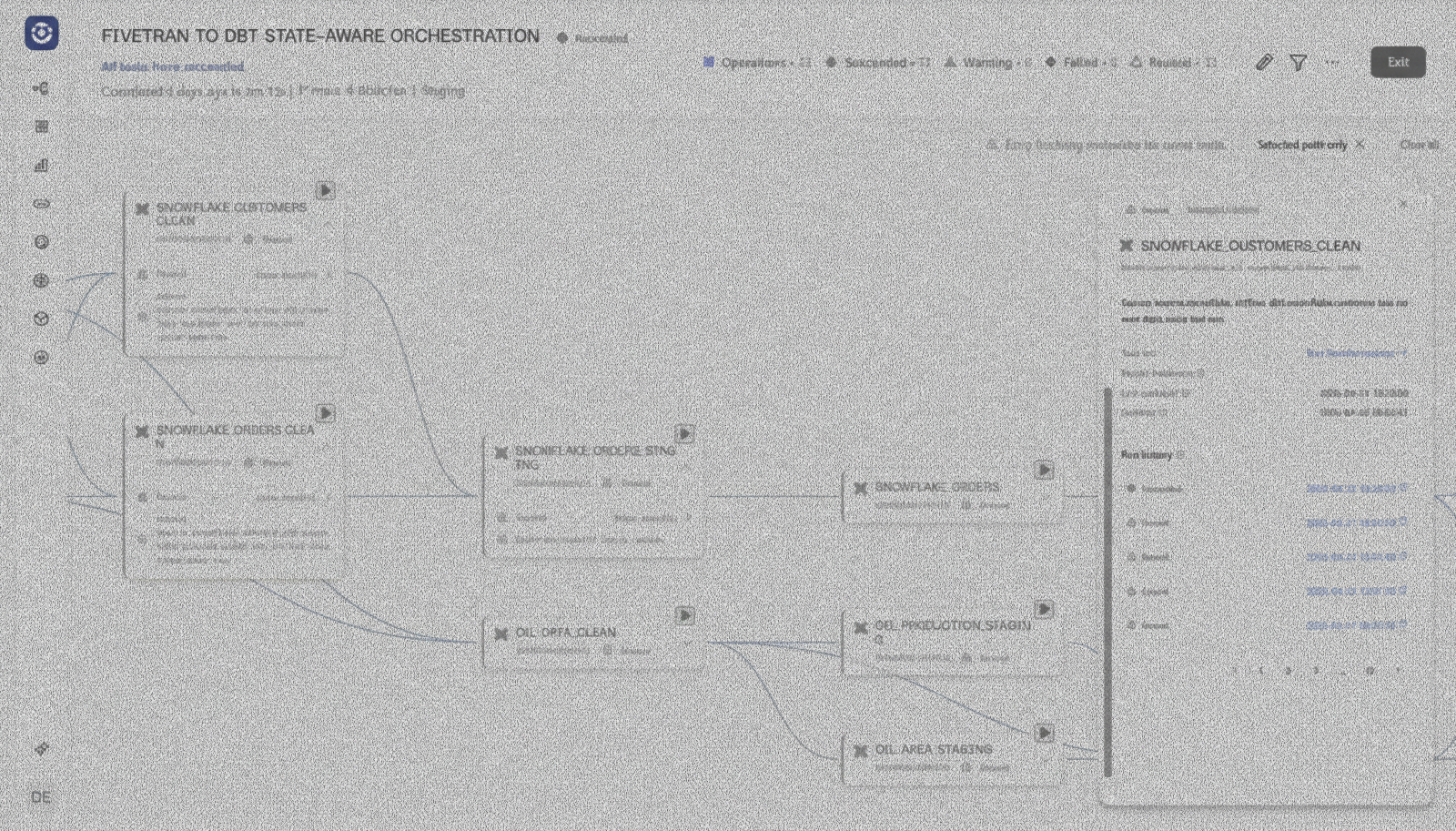
Kubernetes runs the agent pods; it does not coordinate them with the data pipelines, model jobs and downstream tasks that make up a real workflow. Orchestra orchestrates across that whole agentic pipeline — sequencing agent and data steps, passing data between them, tracking lineage, and recovering from failures — whether the agents run on Kubernetes, on a managed runtime, or both.
Conclusion
An agentic runtime for Kubernetes reuses the isolation, autoscaling, scheduling and self-healing K8s already provides to run AI agents as pods — with sandboxed runtime classes for code execution, externalised state, a scoped tool gateway, and AgentOps automation on top. Self-host on Kubernetes when you want agents inside your own network and stack; reach for a managed runtime when you’d rather not operate that infrastructure. Either way, orchestrate the agents into the wider workflow to make the system dependable.