Storage is the least glamorous part of the AI stack and one of the most decisive. Storage in the AI pipeline determines how fast you can train, how cheaply you can serve, and whether your GPUs sit idle waiting for data. This guide covers the role of storage across the AI pipeline, when to use NVMe storage for AI reasoning pipelines, how to choose high-throughput object store solutions for AI training pipelines, and how to think about the cost of scalable storage for AI data pipelines.
Why storage matters in the AI pipeline
Modern accelerators are extraordinarily fast and extraordinarily expensive. If storage cannot feed them data quickly enough, you pay for idle GPUs — one of the most common and costly inefficiencies in AI infrastructure. Storage also dominates the cost of holding the enormous datasets that AI data pipelines accumulate. Getting the storage tier right is therefore both a performance and a cost decision.
The storage hierarchy for AI
Object storage
Object stores (S3, GCS, Azure Blob and compatible systems) are the backbone of AI storage: virtually unlimited capacity at low cost per gigabyte, ideal for raw data, datasets and model artefacts. The trade-off is higher latency, which is why object storage is paired with faster tiers for hot data.
NVMe and local SSD
NVMe drives deliver very high throughput and low latency, making them ideal for the hot path: caching training shards near the GPU, and serving the low-latency reads that reasoning and inference workloads demand. NVMe storage for AI reasoning pipelines keeps token-by-token generation fast by ensuring model weights, KV caches and retrieved context are available with minimal delay.
Parallel and distributed file systems
For large-scale training, parallel file systems and high-performance enterprise storage feed many GPUs concurrently, sustaining the aggregate bandwidth that distributed training requires.
High-throughput object store solutions for AI training pipelines
Training is throughput-bound: you need to stream huge volumes of data to many workers without bottlenecks. When choosing high-throughput object store solutions for AI training pipelines, weigh:
- Aggregate bandwidth to saturate your GPU fleet during data loading.
- Parallelism — how many concurrent readers the store sustains without degradation.
- Caching integration with an NVMe tier so repeated epochs read from fast local storage.
- Data layout — sharding and file formats that favour sequential, parallel reads.
NVMe storage for AI reasoning and inference
Reasoning and inference are latency-bound rather than throughput-bound. NVMe and local SSD shine here: fast loading of model weights, low-latency access to KV caches for long-context generation, and rapid retrieval of context for RAG. For an AI reasoning pipeline, every millisecond of storage latency adds to time-to-first-token, so the hot path belongs on NVMe.
The cost of scalable storage for AI data pipelines
Storage cost is more than the per-gigabyte price. Account for:
- Capacity across tiers, using lifecycle policies to move cold data to cheaper storage.
- Egress and request costs, which can dwarf capacity costs for chatty workloads.
- Idle-GPU cost caused by under-provisioned storage bandwidth — often the largest hidden cost of all.
- Duplication from copying datasets between systems, which good lineage and a lakehouse architecture reduce.
The cheapest storage strategy is usually a tiered one: object storage for capacity, NVMe for the hot path, and incremental, state-aware processing so you are not repeatedly reading and rewriting data you do not need.
Storage and the rest of the stack
Storage decisions ripple through your MLOps stack. Incremental processing reduces how much data you move; good lineage prevents needless duplication; and observability tells you when storage is the bottleneck. Treat storage as part of pipeline design, not an afterthought.
Storage across the pipeline stages
Different stages of the AI pipeline place very different demands on storage, and a one-size-fits-all choice is almost always wrong:
- Ingestion and raw landing: high write throughput and cheap capacity — object storage is the natural home.
- Training: sustained, parallel read bandwidth to keep many GPUs fed — object storage backed by an NVMe cache, or a parallel file system at large scale.
- Feature and vector serving: low-latency random reads — fast local or in-memory tiers for hot features and indexes.
- Inference and reasoning: minimal latency on the hot path — NVMe for weights, KV caches and retrieved context.
- Archival: rarely accessed data — cold object tiers governed by lifecycle policies.
Enterprise and on-prem storage for AI
Not every AI workload lives in the public cloud. Regulated industries and organisations with large existing investments often run AI on enterprise storage platforms in their own data centres. The principles are unchanged — tiering, parallel throughput for training, low latency for inference — but the implementation leans on high-performance enterprise and scale-out file systems engineered to feed GPU clusters. The questions to ask are the same as in the cloud: can it sustain the aggregate bandwidth your accelerators need, does it tier hot and cold data sensibly, and does it integrate with the orchestration and observability layers that tell you when storage is the bottleneck?
Data formats and layout matter as much as hardware
It is tempting to treat storage purely as a hardware decision, but how you lay data out is just as important. Columnar formats like Parquet, sensible partitioning and right-sized files dramatically affect read efficiency — a poorly partitioned dataset can make even the fastest storage crawl, while a well-laid-out one lets cheap object storage perform admirably. For training, sharding data so workers can read in parallel without contention is critical. For retrieval, the structure of your vector index drives both latency and cost. In other words, much of the performance attributed to storage hardware is really about data engineering — another reason storage belongs in pipeline design rather than being treated as an afterthought.
How Orchestra fits
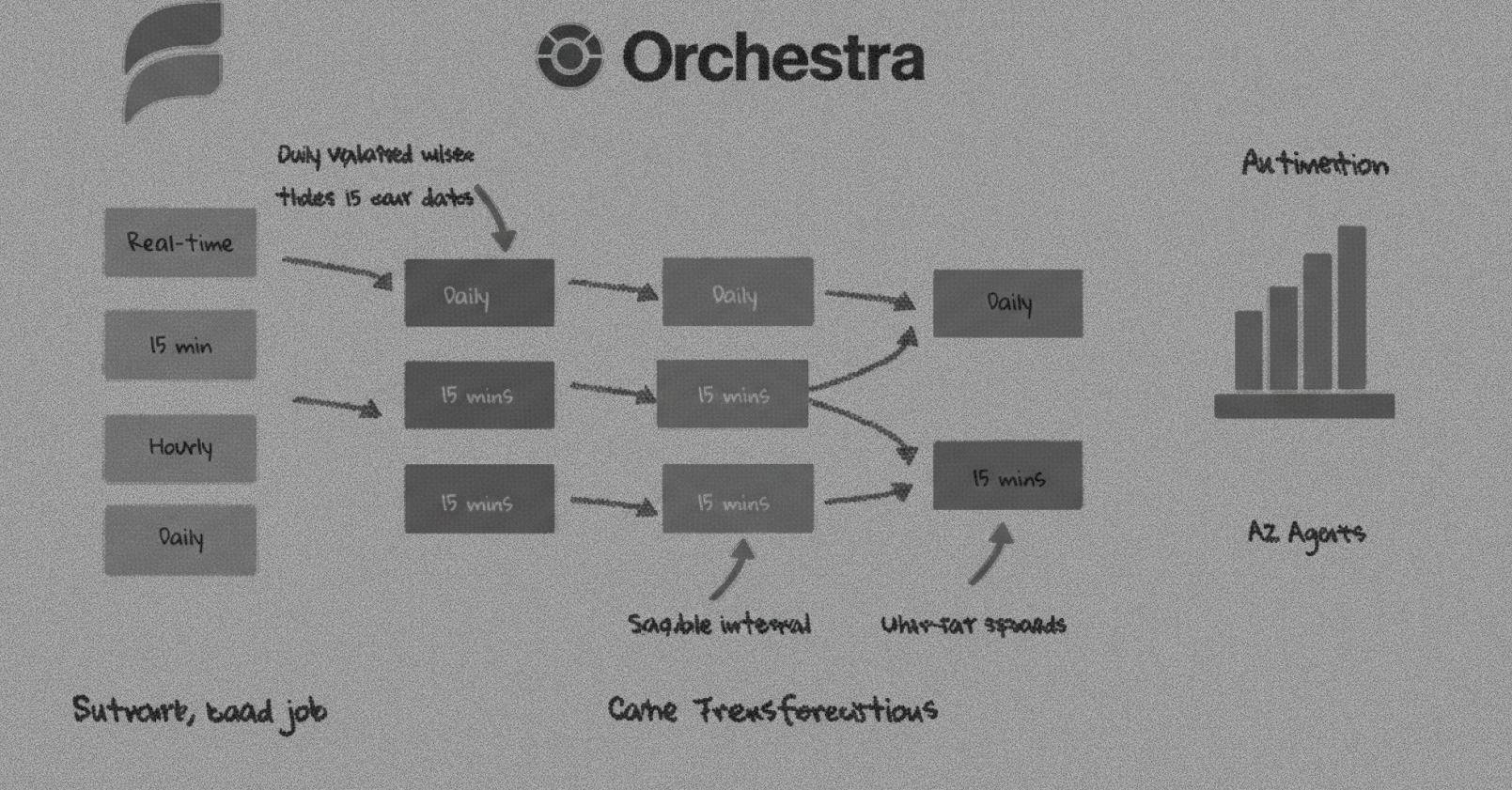
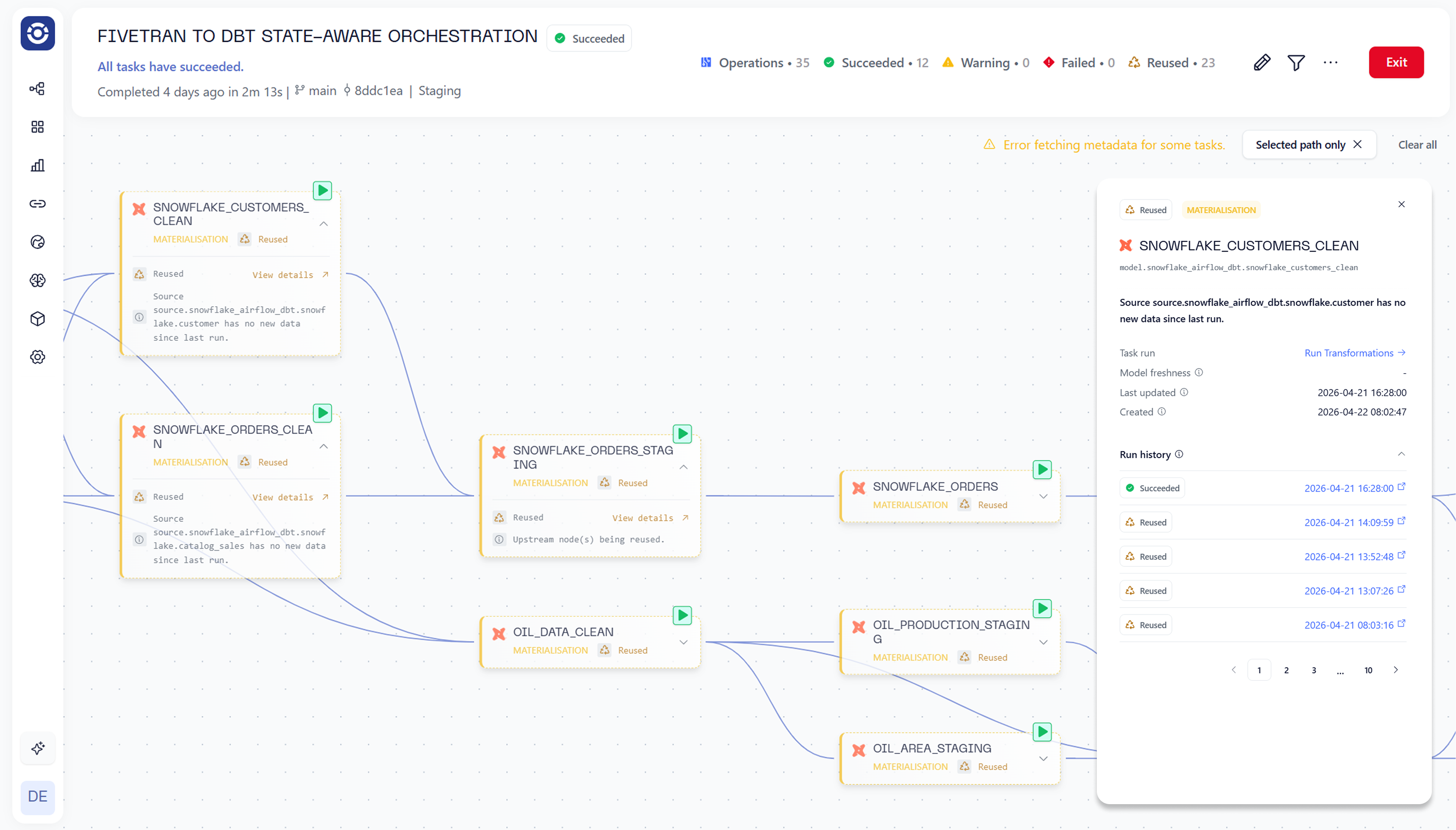
Orchestra’s state-aware orchestration processes only the data that has changed, which directly reduces storage I/O and cost across your AI data pipelines. Combined with end-to-end lineage, it helps you avoid the duplication and unnecessary reprocessing that quietly inflate storage bills.
Storage and the GPU utilisation problem
It is worth dwelling on the single most expensive storage mistake in AI: starving your accelerators. A modern GPU or TPU represents an enormous hourly cost, and if storage cannot deliver data fast enough, that hardware sits idle while still being paid for. Teams routinely discover that their training jobs are not compute-bound at all but data-loading-bound — the model spends a large fraction of each step waiting for the next batch. The fix is rarely a bigger GPU; it is a faster data path: caching hot shards on NVMe near the accelerator, laying data out for parallel sequential reads, and ensuring the object store can sustain the aggregate bandwidth the fleet demands. Measuring GPU utilisation and data-loading time is the way to find this problem, and it almost always pays for the storage investment many times over.
A practical storage decision framework
Faced with a storage choice, work through a short set of questions rather than reaching for the most powerful option by default:
- Is the workload throughput- or latency-bound? Training favours throughput; inference and reasoning favour latency.
- How hot is the data? Frequently accessed data justifies a fast tier; cold data belongs in cheap object storage.
- What is the access pattern? Large sequential reads and small random reads call for different layouts and tiers.
- What does idle compute cost? The more expensive your accelerators, the more a fast data path is worth.
- How much data can you avoid moving? Incremental, state-aware processing is often cheaper than any storage upgrade.
Answering these usually points to a tiered design rather than a single tier, balancing cost against the performance each stage actually needs.
Reducing storage cost with better pipeline design
The cheapest byte is the one you never read or write twice. Much of what looks like a storage cost problem is really a pipeline design problem: full rebuilds that reprocess unchanged data, datasets copied between systems because lineage is unclear, and intermediate outputs that accumulate because nothing cleans them up. Incremental, state-aware processing — doing only the work that changed — cuts read and write volume directly. Good lineage prevents needless duplication by making it clear what already exists and where. And lifecycle policies retire cold data automatically. In other words, better pipeline design is one of the most effective storage cost levers you have, often more so than negotiating a lower per-gigabyte rate.
Key takeaways on AI pipeline storage
Storage rewards deliberate design more than raw spending. The essentials are worth restating: match the tier to the workload, using cheap object storage for capacity and fast NVMe for the latency-sensitive hot path of reasoning and inference; for training, prioritise sustained parallel throughput so accelerators never starve; watch GPU utilisation as the signal that storage, not compute, may be your bottleneck; account for the full cost, including egress, requests and idle compute, not just the per-gigabyte rate; and remember that data layout and incremental processing often matter as much as the hardware underneath. Above all, treat storage as an integral part of pipeline design rather than an afterthought, because decisions made here ripple through the cost and performance of your entire AI data pipeline. The teams that get storage right keep their accelerators busy and their bills predictable; the ones that treat it as plumbing pay for both idle hardware and surprise invoices.
Conclusion
Storage in the AI pipeline is a performance and cost lever hiding in plain sight. Use object storage for capacity, NVMe for the latency-sensitive hot path of reasoning and inference, high-throughput stores for training, and incremental processing to keep costs in check. Align it with your AI data pipeline design and you will keep your accelerators busy and your bills sane.